LCHL researcher Dr. James Hazel speaks at AIGHD fellows event
6 July 2026
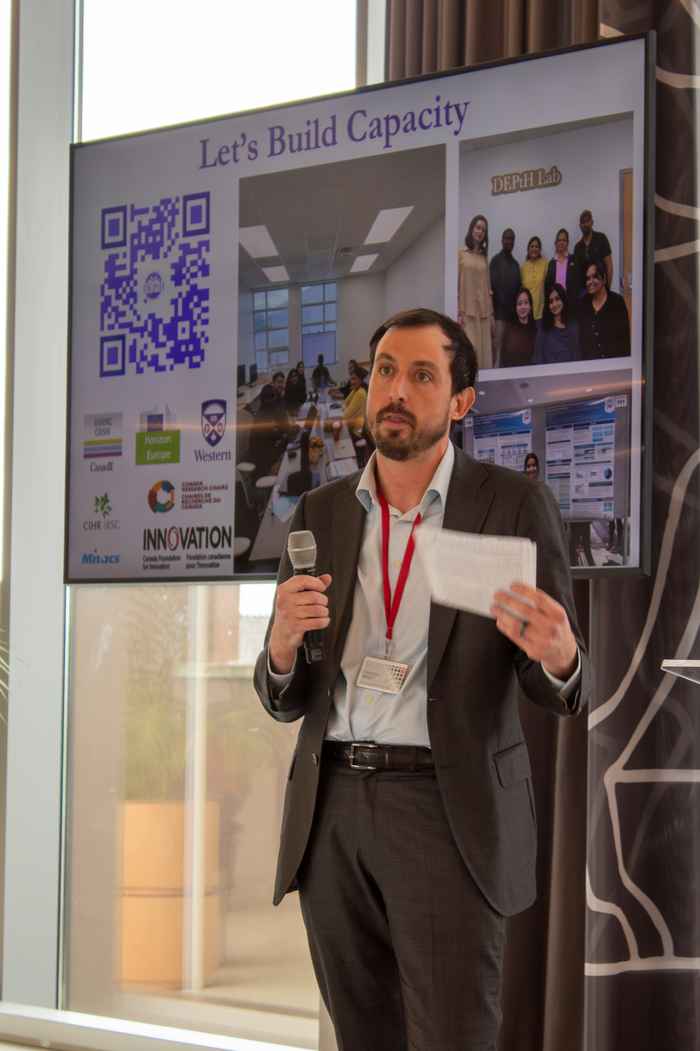
The event started with a keynote from Prof. Tarun Katapally (Western University, Canada) His talk, ‘Designing for whom? Digital health solutions & the equity gap’, challenged the idea that digital health alone can solve the growing pressures on healthcare systems. Instead, he argued that digital health can also reinforce existing health inequities. When access to technology, digital skills and resources is unequal, technological inequity leads to a lack of "techquity". This raises an important question: how can we ensure that digital health solutions reduce, rather than widen, health inequities?
From a legal perspective, Dr. James Hazel highlighted a key question in the development and use of health data: who gets to decide how collected data is used, while ensuring that health equity is achieved as fairly as possible? He argued that techquity is not only about building equity into the design, development and deployment of technology, but must also extend to its governance: who owns the data, who exercises control over it and who is responsible when data is misused. From this perspective, James highlighted that the equity gap in digital health is also a governance gap, suggesting that improvements in design alone are unlikely to fully address the pressures on healthcare systems.
James pointed to the ELSA Lab AI for Health Equity, led by the UvA, as an important initiative dedicated to embedding ethical, legal and societal considerations into health innovation. By bringing together citizens, researchers, policymakers and other partners around the same table, the lab explores how the law can support more equitable health outcomes.